Snapshot
- Structured Healing Approach: Full-arch dental implants aftercare follows defined stages: immediate post-surgical care to long-term maintenance.
- Osseointegration-Focused: Early protection supports stable bone-to-implant fusion over several months.
- Diet and Hygiene Critical: Soft food protocols and modified oral hygiene reduce biological complications.
- Behavioural Compliance Matters: Bite adjustment and avoiding smoking/contact sports directly influence implant longevity.
Synopsis
Recovery from full-arch dental implant surgery plays a vital role in long-term success and longevity. Structured aftercare in the days and weeks following dental implant treatment supports healing, reduces swelling, maintains implant stability, and protects bone integration.
By following stage-wise care, from immediate post-surgical precautions to gradual return to normal eating and activity, patients can minimise complications and maintain stable, functional implant outcomes.
Immediate Post-Op Instructions
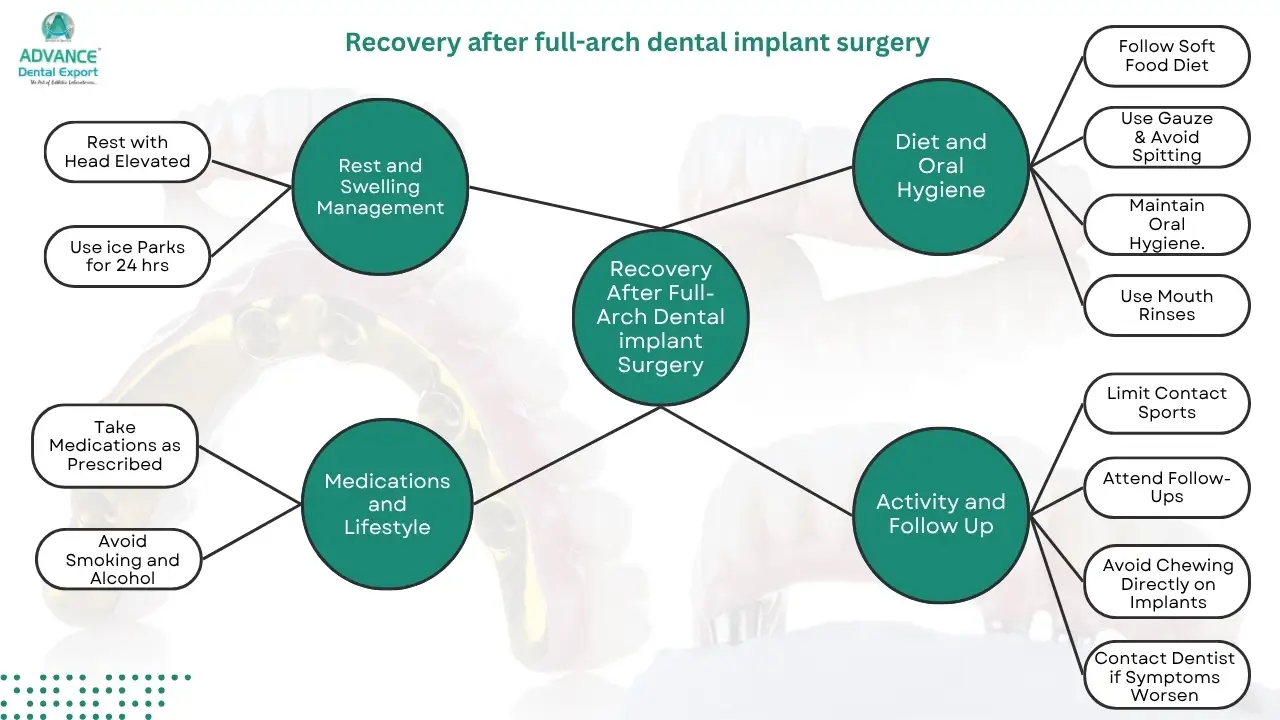
The first 72 hours after surgery are critical for clot formation , inflammation control, and protecting the surgical site. Care during this phase directly influences early healing and implant stability.
Managing Bleeding and Clot Formation
- Light bleeding is common during the first 24 hours. Firm biting on gauze for 30 minutes supports clot formation.
- Replace the gauze only when it is fully saturated. Frequent changing may disrupt clot stability.
- A moistened black tea bag can assist clotting if bleeding persists.
- Contact the clinic if bleeding remains heavy or uncontrolled.
Controlling Swelling and Facial Discomfort
- Swelling typically peaks between days two and three post-surgery typically.
- Apply ice packs externally for a 20-minute on-off pattern during the first 24 hours.
- Keep the head elevated while resting to help reduce facial swelling.
- Bruising around the cheeks or jaw may occur and resolve gradually.
Pain Control and Prescribed Medications
- Begin pain medication before the local anaesthetic wears off to maintain comfort.
- Take antibiotics and anti-inflammatory drugs exactly as prescribed.
- Avoid skipping doses, even if discomfort appears manageable.
- Do not combine medications without professional advice.
Eating and Drinking in the First 72 Hours
- Follow a soft, cold, or room-temperature diet such as yoghurt, smoothies, mashed vegetables, and soups cooled to lukewarm.
- Avoid hot foods, spicy items, alcohol, and carbonated drinks.
- Do not use straws, as suction may disturb the surgical clot.
- Maintain hydration with frequent small sips of water.
Oral Hygiene Restrictions on Day One
- Avoid rinsing, spitting, or touching the surgical site on the first day.
- Gentle tooth brushing is permitted away from implant areas.
- Do not use mouthwash unless specifically prescribed.


Activity Limitations and Rest
- Rest for the first 24-48 hours and avoid bending, lifting, or heavy activity.
- Smoking and alcohol must be avoided, as they impair blood flow and healing.
- Resume light daily activities only when comfortable.
Is Recovery From Dental Implants Painful?
Some discomfort and swelling are expected after full-arch implant surgery, particularly during the first few days. Pain is usually well-controlled with prescribed medication and steadily improves.
Severe or worsening pain, fever, or persistent swelling may indicate complications and should be assessed promptly.
Initial Recovery After Full-Arch Dental Implants
Weeks one and two focus on tissue healing, inflammation reduction, and gradual return to normal routines while protecting the implants .
Gradual Return to Daily Activities
- Avoid high-impact exercise or heavy lifting for at least one week.
- Fatigue during early healing is normal and should guide activity levels.
Oral Hygiene During Early Healing
- Use a soft toothbrush around implants.
- Use chlorhexidine mouthwash or saline rinses as advised.
- Maintain hygiene around temporary prostheses to reduce plaque accumulation.
Diet Progression and Chewing Guidelines
- Continue a soft, non-chew diet; foods requiring minimal biting force.
- Avoid hard or sticky items like chocolate, peanuts or chewing gum.
- Dairy may be limited initially if it triggers nausea or discomfort.
Swelling Resolution and Tissue Healing
- Inflammation reduces steadily over 7-14 days.
- Minor gum tenderness and tightness are common during tissue remodelling.
- Persistent swelling beyond two weeks should be reviewed.
Follow-Up Visits and Suture Care
- Attend scheduled reviews for suture assessment or removal.
- Dissolvable sutures typically release within 5-7 days.
- Temporary prostheses are checked to ensure even pressure distribution.
Long-Term Aftercare
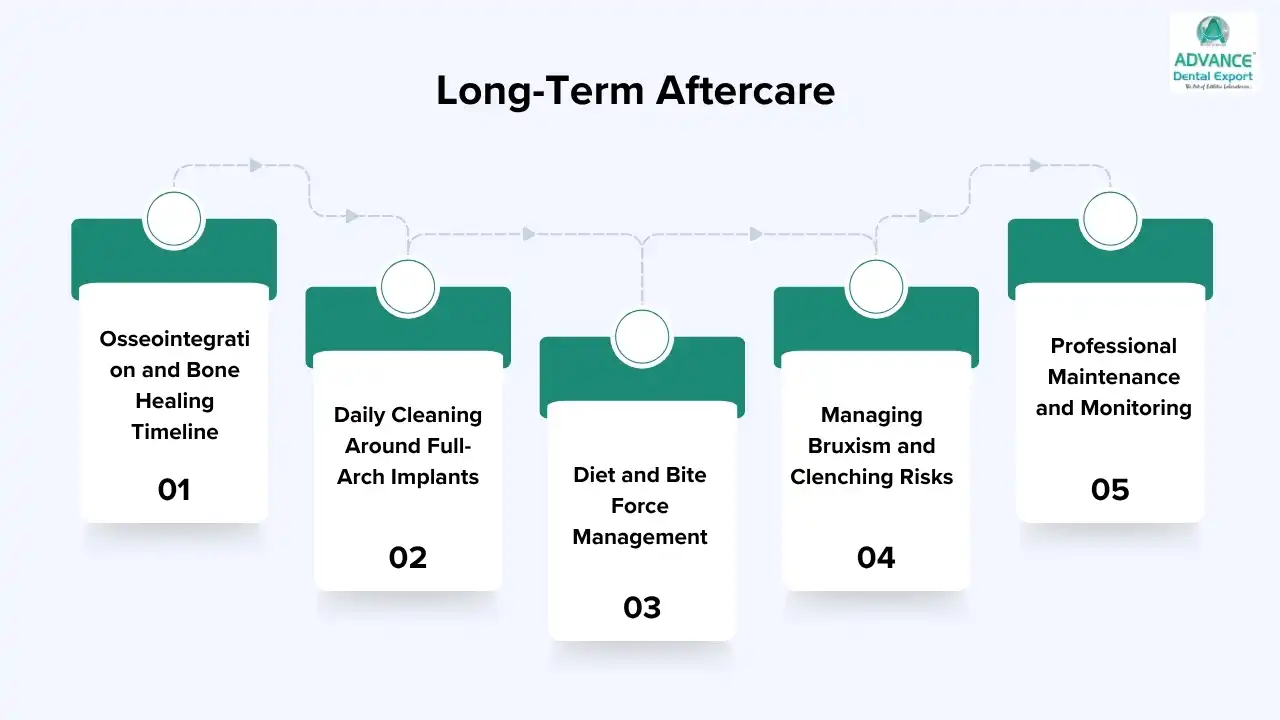
Once early healing is complete, long-term implant success depends on protecting osseointegration and maintaining meticulous oral care.
Osseointegration and Bone Healing Timeline
- Bone fusion typically occurs over 3-6 months.
- During this phase, implants remain vulnerable to overload.
Daily Cleaning Around Full-Arch Implants
- Brush twice daily using a soft or implant-specific toothbrush.
- Water flossers and interdental brushes help clean under prosthetic bridges.
- Avoid abrasive toothpaste that may damage prosthetic surfaces.
Diet and Bite Force Management
- Gradually reintroduce firmer foods once approved by the clinician.
- Avoid biting excessively hard objects or using teeth as tools.
- Balanced chewing prevents uneven implant loading.
Managing Bruxism and Clenching Risks
- Clenching or grinding increases implant stress.
- A custom night guard is recommended for protection.
Professional Maintenance and Monitoring
- Regular dental visits allow early detection of biological or mechanical issues.
- Professional cleaning helps maintain gum health around implants.
- Radiographic reviews assess long-term bone stability.
How Long Do Full-Arch Implants Last With Proper Aftercare?
With correct placement and consistent aftercare, full-arch implants demonstrate high long-term survival rates. Clinical data support predictable function beyond 15-20 years.
Longevity depends on oral hygiene, bite management, regular reviews, and avoidance of harmful habits such as smoking or uncontrolled bruxism.
Looking for a trusted lab partner? Get high-precision restorations from Advance Dental Export
Do’s and Don’ts During Full-Arch Dental Implant Recovery
|
Do’s |
Don’ts |
|
Rest with your head elevated for the first 24-48 hours |
Do not lie flat immediately after surgery |
|
Use ice packs intermittently to limit swelling |
Avoid heat application in the early phase |
|
Follow a soft, cool diet and progress gradually |
Do not chew hard, sticky, or crunchy foods |
|
Take prescribed medications exactly as advised |
Do not skip or stop medications early |
|
Maintain gentle oral hygiene with a soft brush |
Do not rinse, spit forcefully, or brush surgical sites on day one |
|
Use prescribed or saline rinses when permitted |
Avoid unapproved mouthwashes |
|
Stay hydrated and eat small, comfortable meals |
Do not use straws |
|
Resume daily activities slowly as advised |
Avoid intense exercise and heavy lifting |
|
Attend scheduled follow-up visits |
Do not ignore persistent pain or swelling |
|
Use a night guard if recommended |
Avoid smoking and alcohol during healing |
Additional Considerations After Implant Surgery
Some post-surgical experiences fall outside routine healing but remain normal when managed correctly.
Nausea, Fever, and General Post-Surgery Reactions
- Temporary nausea may occur due to medication or anaesthesia.
- Sip clear fluids slowly and resume food once symptoms settle.
- Mild fever within 24-36 hours can be managed with prescribed medication.
- Persistent fever requires clinical review.
Sutures, Bone Sensations, and Normal Healing Changes
- Dissolving sutures may loosen or fall out naturally.
- Small, sharp bone areas may be felt as the gums heal and reshape.
- These typically resolve without intervention.
Jaw Stiffness, Throat Discomfort, and Soft Tissue Care
- Limited mouth opening and sore throat may occur due to muscle swelling.
- Symptoms usually improve within a few days.
- Keep lips moisturised to prevent cracking.
Special Precautions and Warning Signs to Watch For
- Avoid nose blowing or sneezing with a closed mouth if sinus grafting was performed.
- Severe throbbing pain several days post-surgery may suggest dry socket and requires evaluation.
- Contact the clinic if pain worsens, swelling increases, or healing feels delayed.
Take Home Message
Successful full-arch dental implants aftercare is a structured, stage-based process. Careful attention during each recovery phase protects healing, supports osseointegration, and ensures long-term implant stability.
Following professional guidance allows patients to recover comfortably and enjoy predictable, lasting outcomes.