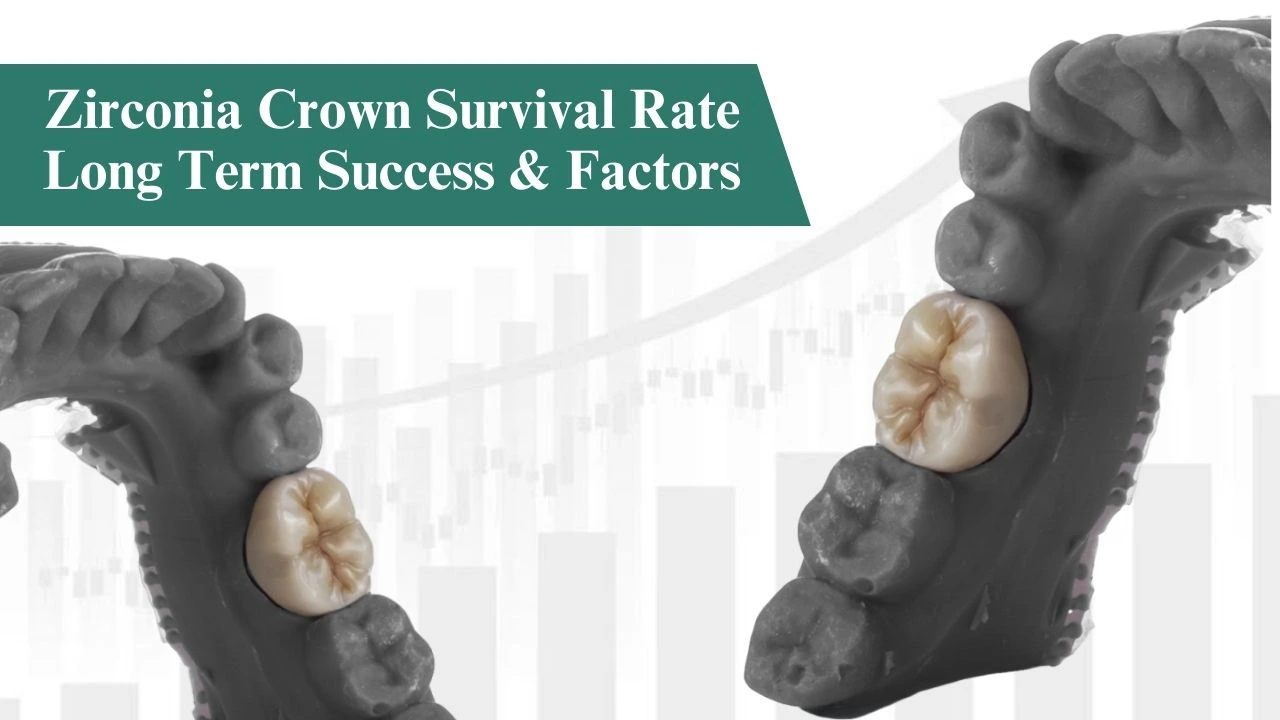
Zirconia crowns offer high strength and excellent aesthetics, but how long do they truly last?
Clinical evidence suggests zirconia crown survival rates are very high in the short to medium term. Meta-analyses report 5-year survival around 95–98%. Individual studies echo this: one prospective series reported a 92.9% survival rate at 10 years.
However, by 15 years, survival rates drop – one long-term study found about 71.7% of zirconia crowns remained intact. These data highlight that, in practice, many zirconia restorations last well beyond a decade. The actual longevity depends on factors like crown design, occlusion, and patient habits.
In this detailed guide, we’ll dive into what influences zirconia crown survival rates , review key studies on longevity, and outline best practices to maximize durability.
It’s important to distinguish survival rate from success rate. Survival simply means the crown is still in place and functional, even if minor issues occurred. Success generally means the crown has no significant complications (no fractures, recurrent decay, etc.). Thus, a zirconia crown “surviving” doesn’t guarantee it’s complication-free, but it signals that it still serves the patient.
Clinical Survival Data (5–15 Years) of Zirconia Crowns
-of-Zirconia-Crowns.webp)
Modern dentistry consistently shows excellent short-term survival for zirconia crowns, with a gradual decline over longer follow-ups. Highlights include:
- 5-year survival ~95–98%. A large systematic review[1] found zirconia single crowns had a 5-year survival of 98.3%. Another meta-analysis of 67 studies reported ~95% 5-year survival, compared with other materials. A clinical study of monolithic zirconia crowns (no porcelain veneer) observed 98% survival at 5 years (only 2 of 50 crowns were lost).
- 7-year survival ~94–95%. The same review noted a 7-year survival of 94.7% for zirconia rehabilitations on teeth and implants.
- 10-year survival ~90–93%. Mid-term studies report survival in the low-90s. Many patients remained fully satisfied despite some technical issues.
- 15-year survival ~70–75%. Long-term data are scarcer but instructive. A 15-year prospective study[2] of 562 zirconia crowns (single and multi-unit on teeth or implants) reported a cumulative failure rate of 28.33%, i.e., about 71.7% survival. This indicates around 28% of zirconia crowns failed by 15 years, meaning most were still in function.
These figures underline that zirconia crowns generally last at least a decade with minimal issues, and many survive 15 years or more. In practice, if you see a 10-year survival in the low-90% range, it’s considered very good.
Factors Affecting Zirconia Crown Longevity
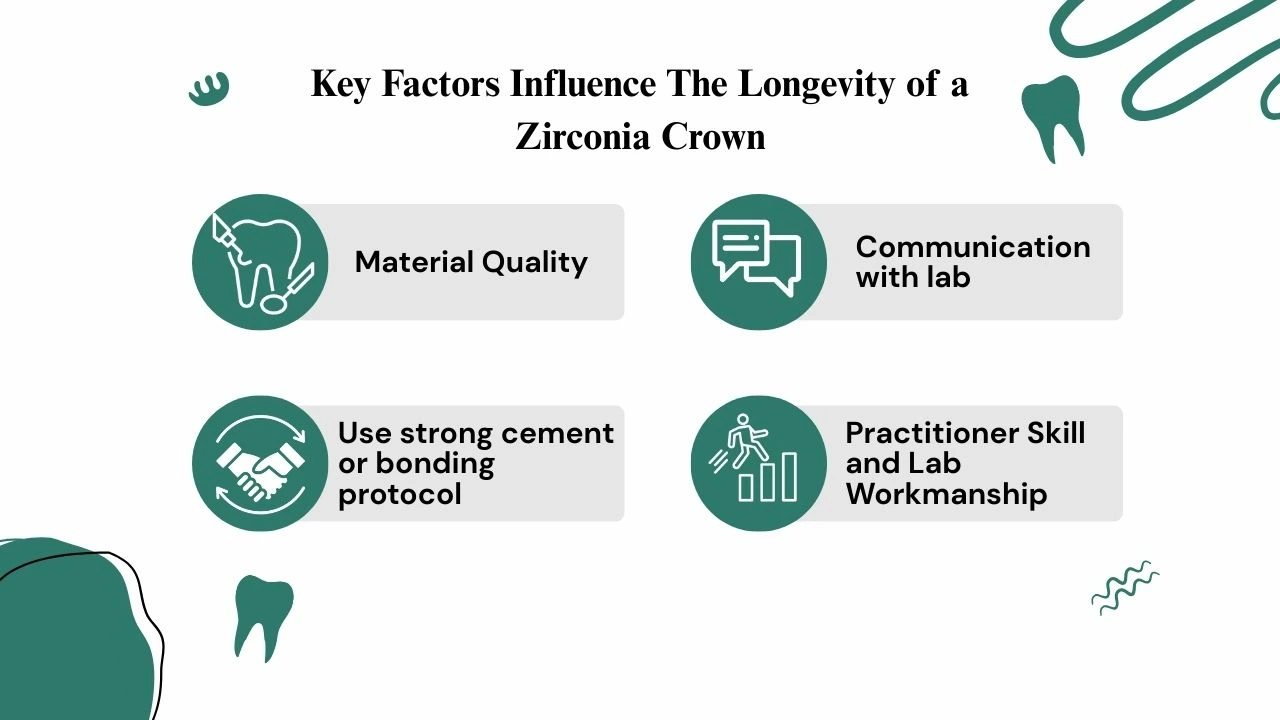
Several key factors influence the longevity of a zirconia crown . Understanding these helps clinicians optimize outcomes:
- Material Quality: Use high-quality, appropriately sintered zirconia and a proven cement or bonding agent. Inferior zirconia or cement can lead to early failures. The material’s strength and translucency also matter.
- Crown Design: Monolithic or Veneered: Monolithic zirconia (solid single-block crowns) is extremely strong and virtually eliminates porcelain chipping. A 5-year study found monolithic crowns had 98% survival. In contrast, veneered zirconia (Zirconia core + porcelain veneer) looks more natural in front teeth but introduces a weak interface.
- Occlusion and Adjustment: Proper fit and occlusal adjustment are critical. High spots or an uneven bite can concentrate forces, causing cracks or crown dislodgement. Adjust and polish the crown to ideal contacts so that chewing forces distribute evenly.
- Oral Hygiene and Secondary Decay: Zirconia itself is biocompatible and resistant to plaque, but crowns with poor margins can allow decay at the tooth-restoration junction. Food trapped under a crown edge can cause caries, weakening the tooth-crown complex.
- Bruxism and Trauma: Grinding or clenching puts extreme stress on crowns. Bruxism can shorten zirconia crown life by causing cracks or fractures.
- Support Structure – Tooth vs. Implant: Zirconia crowns can be cemented on natural teeth or on an implant . Crowns on natural teeth often fare slightly better long-term. Natural teeth have a periodontal ligament that buffers forces, whereas implants are rigid.
- Practitioner Skill and Lab Workmanship: Meticulous tooth preparation and crown fabrication are fundamental. The dentist’s prep geometry (adequate taper and height), margin placement, and provisional restoration all affect final success. The lab must ensure a precise fit and proper veneering technique (for layered crowns).


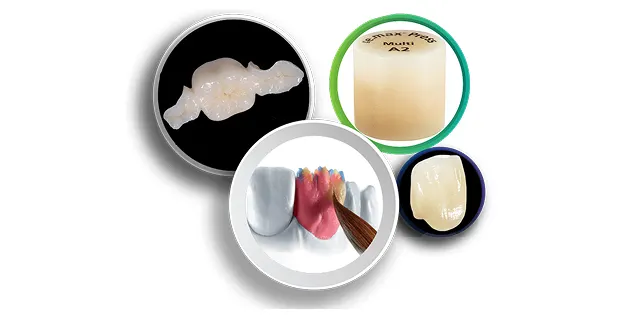
By addressing these factors— choosing robust crown materials , designing crowns wisely, adjusting occlusion, and managing patient-specific risks—you can maximize the zirconia crown survival rate in your practice.
Common Zirconia Crown Failures and Complications
Although zirconia crowns are robust, failures do occur. Knowing the typical failure modes helps prevent them:
- Veneer Chipping/Fracture: The most common issue with layered zirconia is chipping of the veneer . Reviews report veneering fractures in roughly 10–15% of cases. In one 15-year series, 5.0% of crowns had veneer fractures, though many were minor.
- Loss of Retention (Debonding): Zirconia crowns can de-cement, especially if preparation geometry is inadequate or if glass-ceramic cement is used improperly. In the 15-year Italian study, 15.3% of cases needed recementation due to loss of retention.
- Secondary Caries / Endodontic Failure: Sometimes, the tooth under a crown may develop decay or a root canal issue.
- Periodontal and Implant Issues: Poor crown margins can irritate gums. In our sources, biological complications (like gum disease or peri-implantitis) were much less frequent than technical ones, but still notable. On implants, loss of retention and perimucositis are concerns.
- Wear of Opposing Teeth: Hard zirconia can cause wear on opposing enamel. High-polished zirconia reduces this, but it is a clinical consideration, especially if the crown is steeper or a night guard is absent for a grinder.
To mitigate these issues, use proper finishing and polishing of zirconia, verify crown margins under magnification, adjust occlusion accurately, and schedule periodic checkups. Early detection of small chips or looseness can allow repair before complete failure.
Tips to Maximize Zirconia Crown Longevity
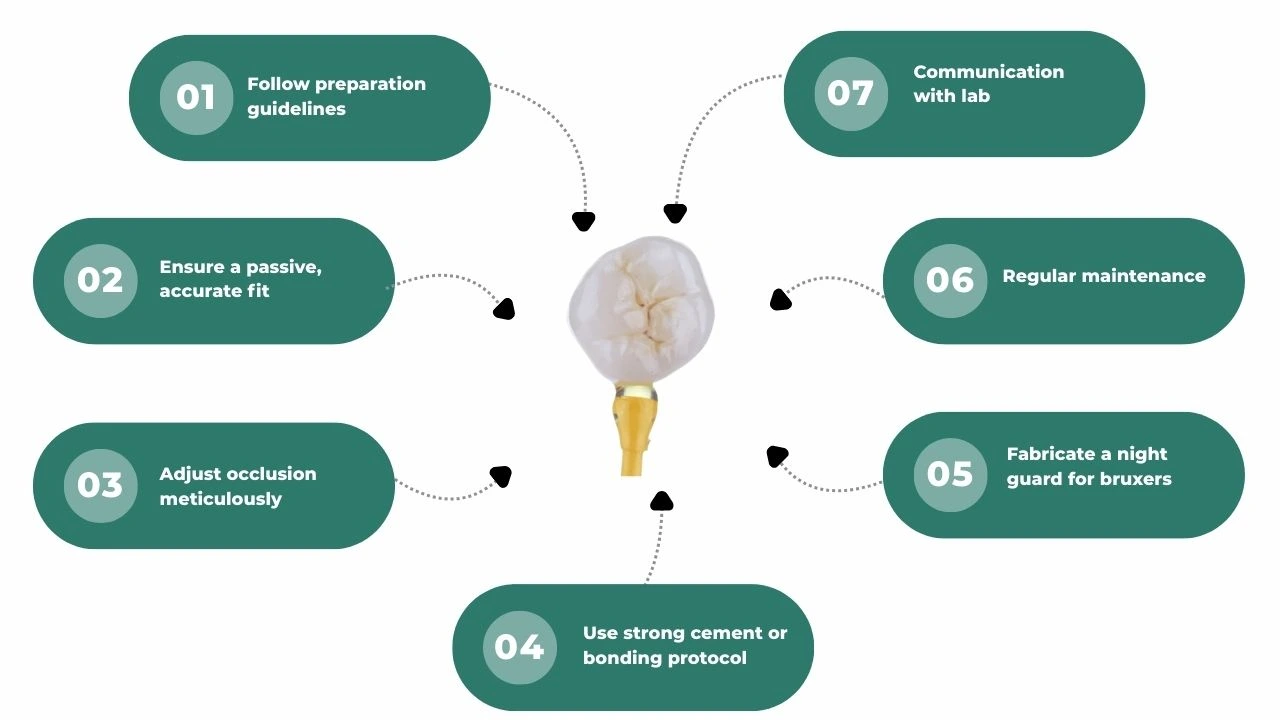
Dentists can take concrete steps to help zirconia crowns last:
- Follow preparation guidelines: Aim for 6–10° convergence, 4 mm wall height, and 1.0–1.5 mm occlusal reduction. Proper taper and height are critical for retention and resistance.
- Ensure a passive, accurate fit: Scan/fit accuracy matters. Crowns should seat fully without rocking. Check contacts on a model and in the mouth before final cementation.
- Adjust occlusion meticulously: After cementing, verify that there are no heavy centric or lateral contacts on the crown. Even small premature contacts can lead to fatigue fractures over time.
- Use strong cement or bonding protocol: Resin cements with MDP/phosphate monomers bond well to zirconia. If retention is a concern, especially for short preps, bonding is advisable.
- Fabricate a night guard for bruxers: Any patient with a grinding habit should wear a custom occlusal guard. A hard acrylic night guard cushions the forces on zirconia restorations.
- Regular maintenance: Instruct patients on cleaning at the margin and in between teeth. Check crowns at routine hygiene visits: look for chips, rough edges, or de-cementation. Promptly address any issues (re-seat a loose crown, smooth a chipped area, etc.).
- Communication with lab: Specify if you want a monolithic design in posterior cases. Provide precise color mapping if doing layered veneers, to minimize adjustments that might thin the porcelain. Ask for fully sintered (no over-sintering that can cause grain pull-out) and properly glazed crowns.
Looking for a trusted lab partner? Get high-precision restorations from Advance Dental Export
By combining sound laboratory practices with vigilant clinical management, you can make the zirconia crown survival rate even higher. In our experience, these crowns often exceed patient expectations for durability when handled this way.
Conclusion
Zirconia crowns are a reliable, long-lasting solution for tooth restoration. By choosing the right zirconia crown type (e.g., monolithic or veneered), preparing teeth correctly, ensuring a perfect fit, and managing patient-specific risks (like bruxism or decay), clinicians can dramatically improve longevity.
In practice, this means a concerted effort from the dentist and dental lab: use top-quality materials, double-check occlusion, and instruct patients on care. The latest evidence suggests that with these precautions, zirconia crowns can function well for a decade or more.
FAQs
Q: How long do zirconia crowns typically last?
A: Most zirconia crowns last at least 10 years. Research shows that around 95–98% survive 5 years and about 92–93% survive 10 years. Long-term data (15+ years) indicate ~70–75% still intact. In practice, well-made zirconia crowns often stay functional for over a decade, especially with proper care.
Q: What factors most affect zirconia crown durability?
A: Key factors include: high-quality materials and cement, correct crown design, and careful occlusal adjustment. Monolithic (solid) crowns resist chipping better than layered ones. Good tooth prep (taper, height), strong bonding, and balanced bite forces are critical. Also, patients’ habits matter: poor hygiene or heavy grinding (bruxism) significantly shortens lifespan. Managing these factors maximizes survival.
Q: What are common reasons zirconia crowns fail, and how can I prevent them?
A: The most frequent issues are veneering porcelain fractures and loss of cementation. To prevent chipping, use a monolithic design when possible or ensure good support for the veneer layer. To avoid debonding, prepare sufficient tooth structure and use a strong resin cement (bonding the zirconia).
Reference Resources:
[1] Prospective study of monolithic zirconia crowns : Solá-Ruiz MF, Baixauli-López M, Roig-Vanaclocha A, Amengual-Lorenzo J, Agustín-Panadero R. Prospective study of monolithic zirconia crowns: clinical behavior and survival rate at a 5-year follow-up. J Prosthodont Res. 2021 Aug 21;65(3):284-290. doi: 10.2186/jpr.JPR_D_20_00034. Epub 2020 Oct 14. PMID: 33041280.
[2] Fifteen-year recall period on zirconia-based single crowns : Khijmatgar S, Tumedei M, Tartaglia G, Crescentini M, Isola G, Sidoti E, Sforza C, Del Fabbro M, Tartaglia GM. Fifteen-year recall period on zirconia-based single crowns and fixed dental prostheses. A prospective observational study. BDJ Open. 2024 Jun 20;10(1):54. doi: 10.1038/s41405-024-00214-7. PMID: 38902278; PMCID: PMC11190277.