When selecting a zirconia crown , you generally have two main options: monolithic (full-contour) zirconia and layered zirconia crowns .
The monolithic zirconia offers excellent mechanical performance without a veneering porcelain layer, making it suitable for many posterior restorations. Layered zirconia combines a strong zirconia framework with aesthetic porcelain, offering greater flexibility for anterior restorations.
You can also choose multilayer zirconia, which incorporates shade and translucency gradients within the zirconia material itself.
Understanding these zirconia crown types helps you select the right restoration based on tooth position, occlusal forces, available preparation space, and aesthetic requirements.
What Are Zirconia Crowns?
Zirconia crowns are metal-free dental restorations made from zirconium dioxide (ZrO₂), a high-strength ceramic stabilised with yttria. Dental laboratories commonly fabricate these crowns using CAD/CAM technology, followed by sintering and finishing.
However, not all zirconia materials have identical properties.
Traditional 3Y-TZP zirconia generally offers higher strength but lower translucency. Newer 4Y-PSZ and 5Y-PSZ formulations improve translucency, although their mechanical strength is generally lower.
These differences influence material selection, particularly when balancing aesthetics against occlusal demands.
For predictable restorations, you should consider both the zirconia formulation and crown design rather than choosing a material based on strength or appearance alone.
Different Zirconia Crown Types Based on Construction
The two primary zirconia dental crown types are monolithic zirconia crowns and layered zirconia crowns.
Both use zirconia as their main structural material, but their fabrication methods and aesthetic characteristics differ.
Understanding these differences helps you determine which design can meet your patient's functional and aesthetic requirements.
1. Monolithic Zirconia Crowns
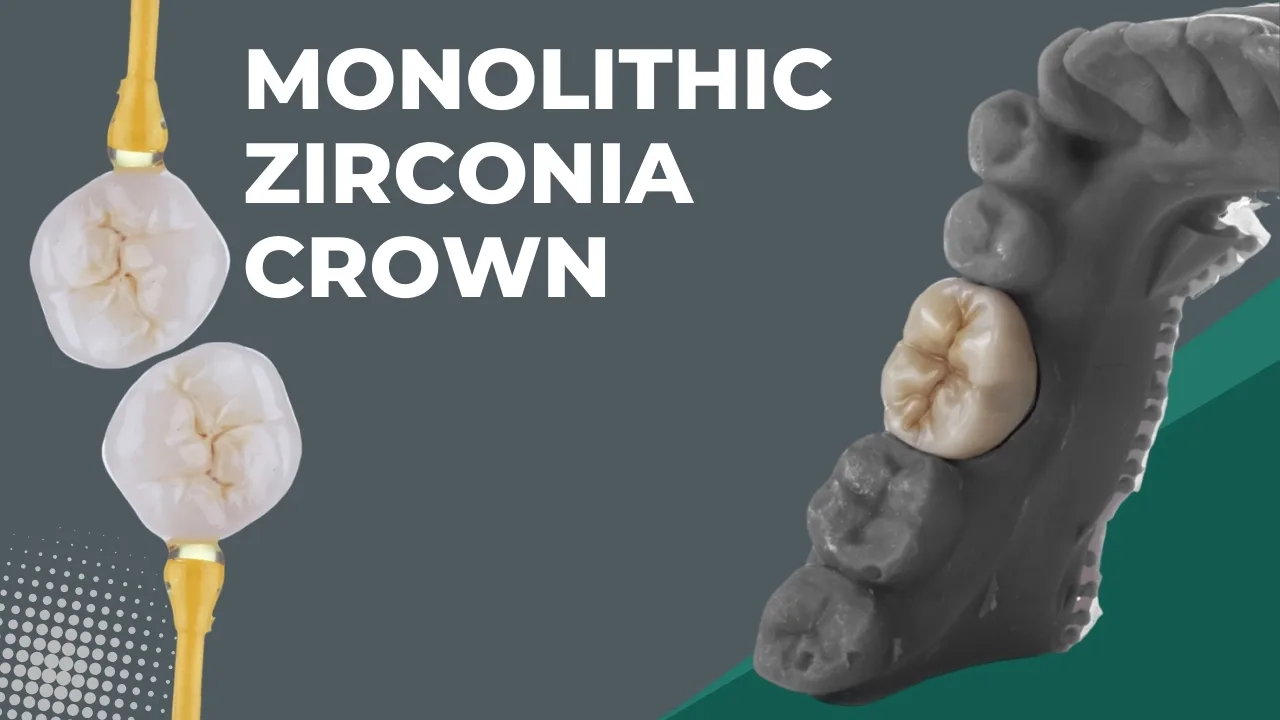
Monolithic zirconia crowns, also known as full-contour zirconia crowns , are fabricated from a single zirconia structure without any additional layer.
A dental laboratory uses CAD/CAM technology to mill the complete crown anatomy from a zirconia blank. The crown is then sintered, characterised, and polished or glazed as required.
The main advantage is reduced risk of veneer chipping. Since there is no separate layer, these restorations eliminate a common complication associated with layered crowns.
This single-piece construction also gives monolithic zirconia an advantage over traditional PFM crowns in certain clinical situations. While PFM crowns rely on a metal framework covered with porcelain, monolithic zirconia eliminates the veneering layer, reducing the risk of porcelain chipping during function.
A systematic review published in Clinical Oral Investigations found significantly fewer chipping complications in monolithic zirconia restorations compared with other zirconia restorations.
2. Layered Zirconia Crowns
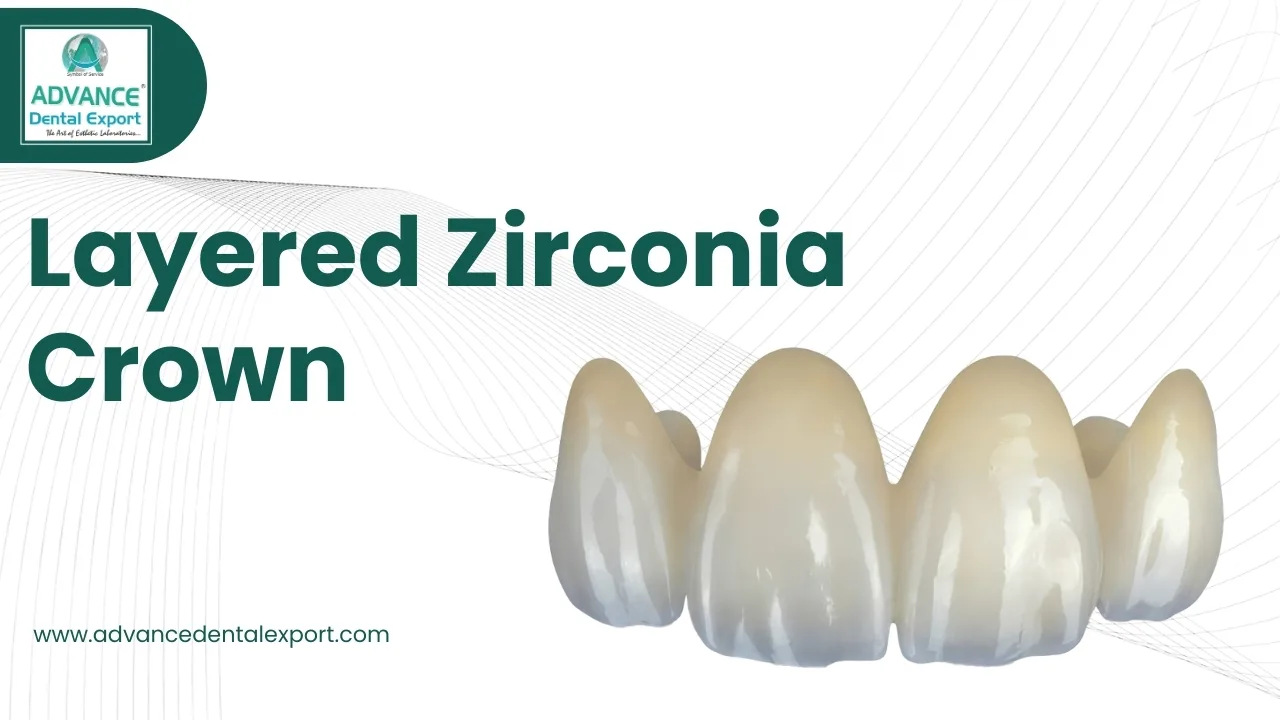
Layered zirconia crowns, also called porcelain-veneered zirconia crowns , consist of a zirconia framework covered with aesthetic porcelain.
The dental lab first designs and mills the zirconia framework. A dental technician then applies veneering ceramic to reproduce the desired shade, translucency, and surface characteristics.
This approach offers greater flexibility when you need to match the natural appearance of adjacent teeth.
However, layered zirconia crowns have an important limitation.
The veneering porcelain can chip or fracture under functional loading. Inadequate framework support, insufficient restorative space, and unfavourable occlusal contacts may increase this risk.
You should therefore provide sufficient preparation space for both the zirconia framework and veneering ceramic.
For selected cases, you can also discuss a facial cutback design with your dental laboratory. This allows porcelain characterisation on visible surfaces while retaining monolithic zirconia in functional contact areas.
What about multilayer zirconia crowns?
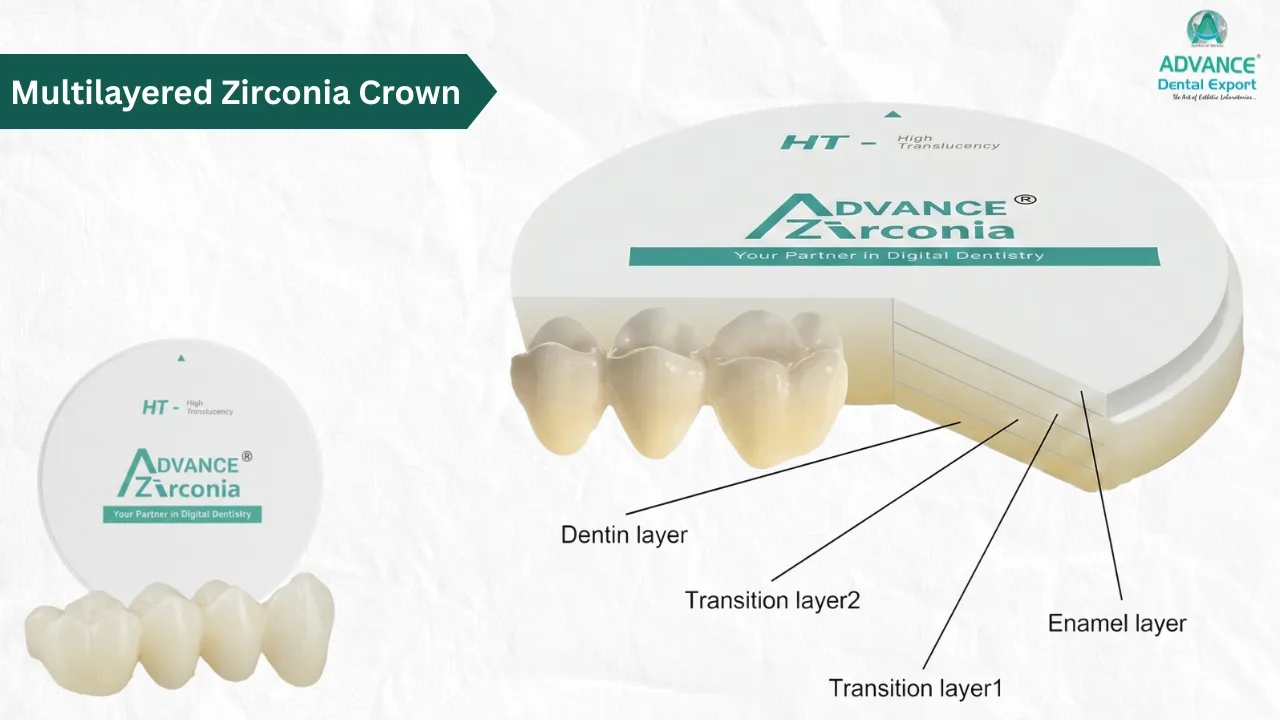
A multilayer zirconia crown is commonly manufactured from a zirconia blank with different shade and translucency zones. Some systems also combine different zirconia compositions within the same blank.
These materials can help create more natural-looking monolithic restorations without requiring extensive porcelain layering.
However, the strength and translucency vary between products. You should confirm the manufacturer's clinical indications and minimum thickness requirements before selecting a multilayer zirconia material.


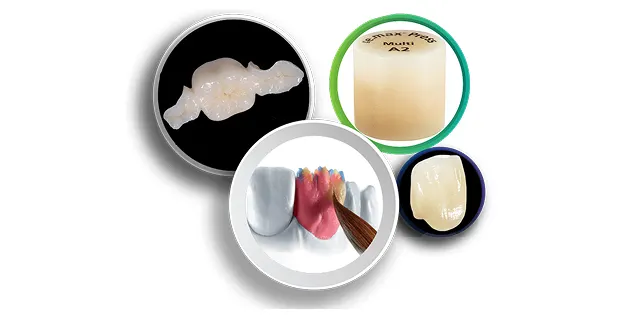
Also, remember that layered zirconia and multilayer zirconia are not interchangeable terms. Layered zirconia contains an applied porcelain veneer, while multilayer zirconia refers to gradations within the zirconia material.
Monolithic vs Layered vs Multilayer Zirconia Crowns: Comparison
When choosing between monolithic, layered, and multilayer zirconia crowns, you should consider the patient's aesthetic requirements, occlusal forces, and available restorative space.
However, these terms describe different characteristics. Monolithic and layered zirconia refer to crown construction, while multilayer zirconia refers to the zirconia material itself. A multilayer zirconia crown can therefore also be monolithic.
The following comparison highlights their key differences:
| Features | Monolithic Zirconia | Layered Zirconia | Multilayer Zirconia |
| Structure | Single zirconia structure | Zirconia framework with veneering porcelain | Zirconia with multiple shade or composition zones |
| Strength | High, depending on zirconia formulation | Strong framework, but porcelain veneer is more vulnerable | Varies according to material composition |
| Aesthetics | Good; depends on translucency and characterisation | Greater control over natural tooth details | Natural-looking shade and translucency gradients |
| Chipping Risk | No veneering porcelain to chip | Higher risk of porcelain chipping | No veneer chipping when used monolithically |
| Best Suited For | Posterior crowns and high-load cases | Highly aesthetic anterior restorations | Anterior and posterior crowns requiring balanced aesthetics and function |
| Key Consideration | Material grade and occlusal requirements | Adequate space and framework support | Material selection and correct positioning within the zirconia blank |
Zirconia Types Based on Compositions
Apart from crown design & construction, zirconia materials are classified based on their yttria (yttrium oxide) content. The three commonly used types are 3Y, 4Y, and 5Y zirconia.
The numbers represent the approximate molar percentage of yttria used to stabilise zirconia. This composition influences the material's strength, translucency, and clinical applications.
1. 3Y Zirconia (3Y-TZP)
3Y zirconia contains approximately 3 mol% yttria and has a predominantly tetragonal crystal structure. It offers high flexural strength and fracture toughness compared with more translucent zirconia formulations.
This makes 3Y zirconia particularly suitable for posterior crowns, restorations exposed to high occlusal forces, and certain multi-unit bridges .
2. 4Y Zirconia (4Y-PSZ)
4Y zirconia contains approximately 4 mol% yttria and offers a balance between strength and translucency. It provides improved light transmission while retaining good mechanical properties.
You can consider 4Y zirconia for anterior and posterior single crowns , particularly when both aesthetics and functional performance are important.
3. 5Y Zirconia (5Y-PSZ)
5Y zirconia contains approximately 5 mol% yttria and has a higher proportion of cubic-phase zirconia, which improves translucency.
This makes it particularly useful for aesthetic anterior crowns , where natural light transmission and shade matching are important.
You should assess occlusal loading, available restorative thickness, and the manufacturer's indications before selecting 5Y zirconia for posterior crowns or bridges.
Choosing From 3Y, 4Y & 5Y Zirconia
The choice between 3Y, 4Y, and 5Y zirconia depends on how you balance mechanical strength with aesthetic requirements.
- Choose 3Y zirconia when high strength and fracture resistance are your main priorities, particularly for demanding posterior restorations.
- Choose 4Y zirconia when you need a balance of strength and translucency for anterior or posterior crowns.
- Choose 5Y zirconia when achieving natural-looking aesthetics is a greater priority and the clinical conditions permit its use.
Remember that zirconia grades do not have identical properties across manufacturers. Multilayer zirconia blanks may also combine different yttria compositions within one material.
Considerations When Choosing Zirconia Crown Types
Choosing between different types of zirconia crowns requires more than comparing strength and aesthetics.
You should assess the tooth position, occlusal forces, restoration thickness, underlying tooth colour, and patient expectations.
The selected zirconia formulation also matters because highly translucent materials do not always provide the same mechanical performance as conventional high-strength zirconia.
1. Clinical Situations for Different Crown Types
Your clinical assessment should guide the choice of zirconia crown design.
For posterior restorations, monolithic zirconia is often a practical option because it eliminates veneering porcelain chipping. However, consider the patient's occlusion, parafunctional habits, and available clearance before selecting the formulation.
For anterior restorations, layered zirconia may offer better control over complex shade characteristics. Highly translucent monolithic zirconia can also be suitable when its optical properties meet the case requirements.
Preparation design is equally important.
Maintain rounded internal line angles, a clearly defined finish line, and sufficient reduction for the selected material. Minimum thickness requirements differ across zirconia formulations and manufacturers.
Before sending the case to your laboratory, confirm:
- Adequate occlusal and axial clearance.
- Preparation margin visibility.
- Available space for porcelain layering, if required.
- Opposing dentition and functional contacts.
- The recommended cementation protocol for the chosen restoration.
After occlusal adjustment, repolish exposed zirconia using an appropriate polishing system. A smooth surface helps limit antagonist enamel wear.
2. Patient Preferences and Needs
Patient expectations also influence your selection of zirconia crown types.
Looking for a trusted lab partner? Get high-precision restorations from Advance Dental Export
Some patients prioritise natural aesthetics, particularly for visible anterior teeth. Others are more concerned about longevity, cost, or the risk of future repairs.
Discuss these priorities before finalising the restoration.
For patients with high aesthetic expectations, assess adjacent tooth shades, incisal translucency, and underlying tooth discolouration. These factors can influence whether a layered or translucent monolithic zirconia crown is more suitable.
For patients with heavy occlusal loading or bruxism, consider whether a high-strength monolithic formulation offers a more appropriate mechanical profile.
You should also explain that layered zirconia has an additional porcelain component that may chip during function.
Restoration cost may vary depending on the material, design, and laboratory workflow. Discuss the treatment options within the patient's budget without compromising clinical requirements.
For aesthetic cases, sharing shade photographs, stump shade details, and patient expectations with your laboratory can improve communication and support more accurate restoration planning.
Conclusion
Understanding the different zirconia crown types helps you make more informed restorative decisions.
Monolithic zirconia crowns are particularly useful when mechanical performance and reduced veneer chipping risk are priorities. Layered zirconia crowns offer greater flexibility for reproducing natural tooth aesthetics, especially in demanding anterior cases.
Multilayer zirconia provides another option for balancing translucency and strength, depending on the material formulation.
Ultimately, the right choice depends on your patient's clinical requirements, occlusal conditions, preparation space, and aesthetic expectations.
Planning your next zirconia restoration? Connect with Advance Dental Export (ADE) to discuss your case requirements and choose a zirconia crown design suited to your treatment plan.
FAQs
When to choose monolithic zirconia for dental crowns?
Monolithic zirconia crowns are the strongest and have low translucency. They are preferred for posterior teeth, for patients with a habit of grinding their teeth (bruxism), and in areas where there is a lot of pressure. They are also used for CAD/CAM crowns.
Layered zirconia crowns: how to find the best balance of beauty and durability?
In a layered zirconia crown, an aesthetic layer of porcelain is fused to a strong zirconia core. This combines the strength of zirconia with the natural appearance (color and translucency) of porcelain. It is particularly preferred for anterior teeth where functional stress is low and aesthetics are important. However, porcelain is at risk of chipping.
What is a multilayered zirconia crown, and why is it best for a natural smile?
Multilayered zirconia crowns are made from a single zirconia block, with different layers of color and translucency, similar to natural teeth. This gives them a very realistic and lifelike appearance. They are best for aesthetic zones (e.g., premolars) and short-term bridges because they reduce the risk of porcelain chipping and offer an excellent balance of strength and beauty.
Zirconia crown strength vs translucency: what’s the difference between 3Y-TZP, 4Y, and 5Y?
There are different types of zirconia that differ in their ratio of strength to translucency:
3Y-TZP: This is the strongest type, but has the lowest translucency. It is used in monolithic crowns and CAD/CAM applications.
4Y: This has a balanced ratio of strength and translucency. It is suitable for layered zirconia, especially for premolars and some anterior cases.
5Y: This has the highest translucency, but has the lowest strength. It is ideal for low-pressure anterior restorations where aesthetics are paramount.
How to choose the best zirconia dental crown for your dental needs?
Choosing the best zirconia dental crown requires considering your dental condition, aesthetic expectations, chewing power (functional load), and budget. Your dentist will evaluate your mouth and recommend which crown is best for you, whether monolithic, layered, or multilayered zirconia, based on your needs.