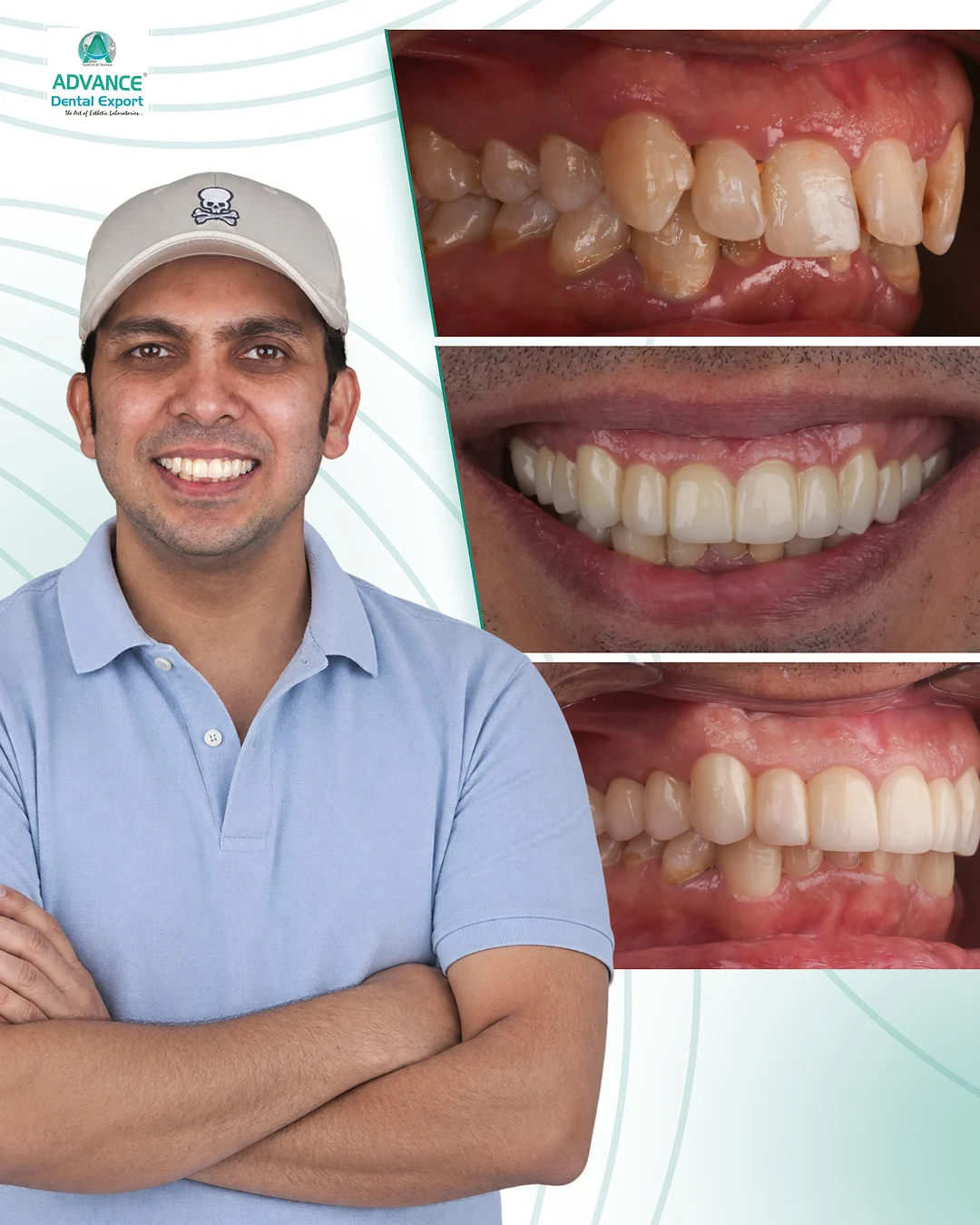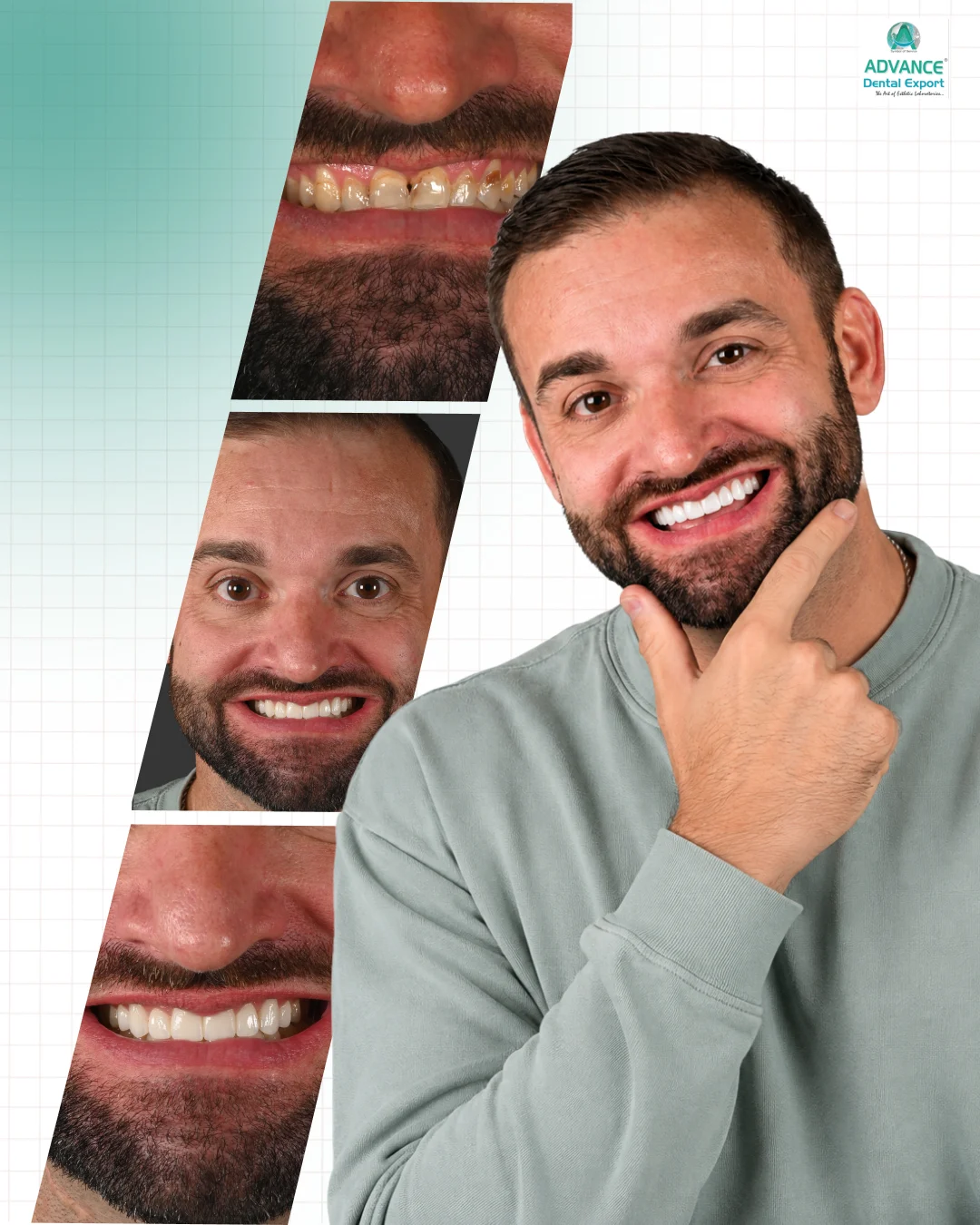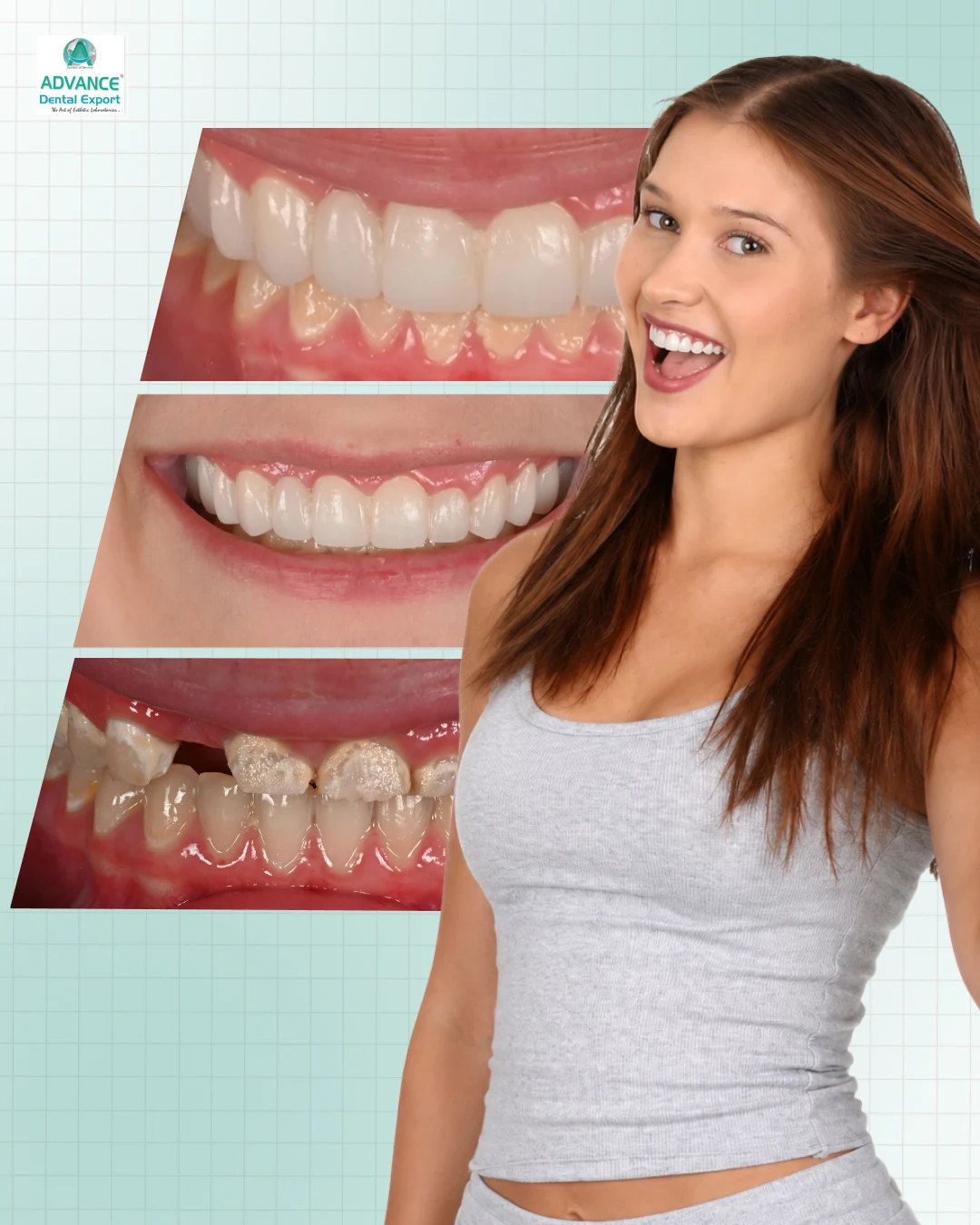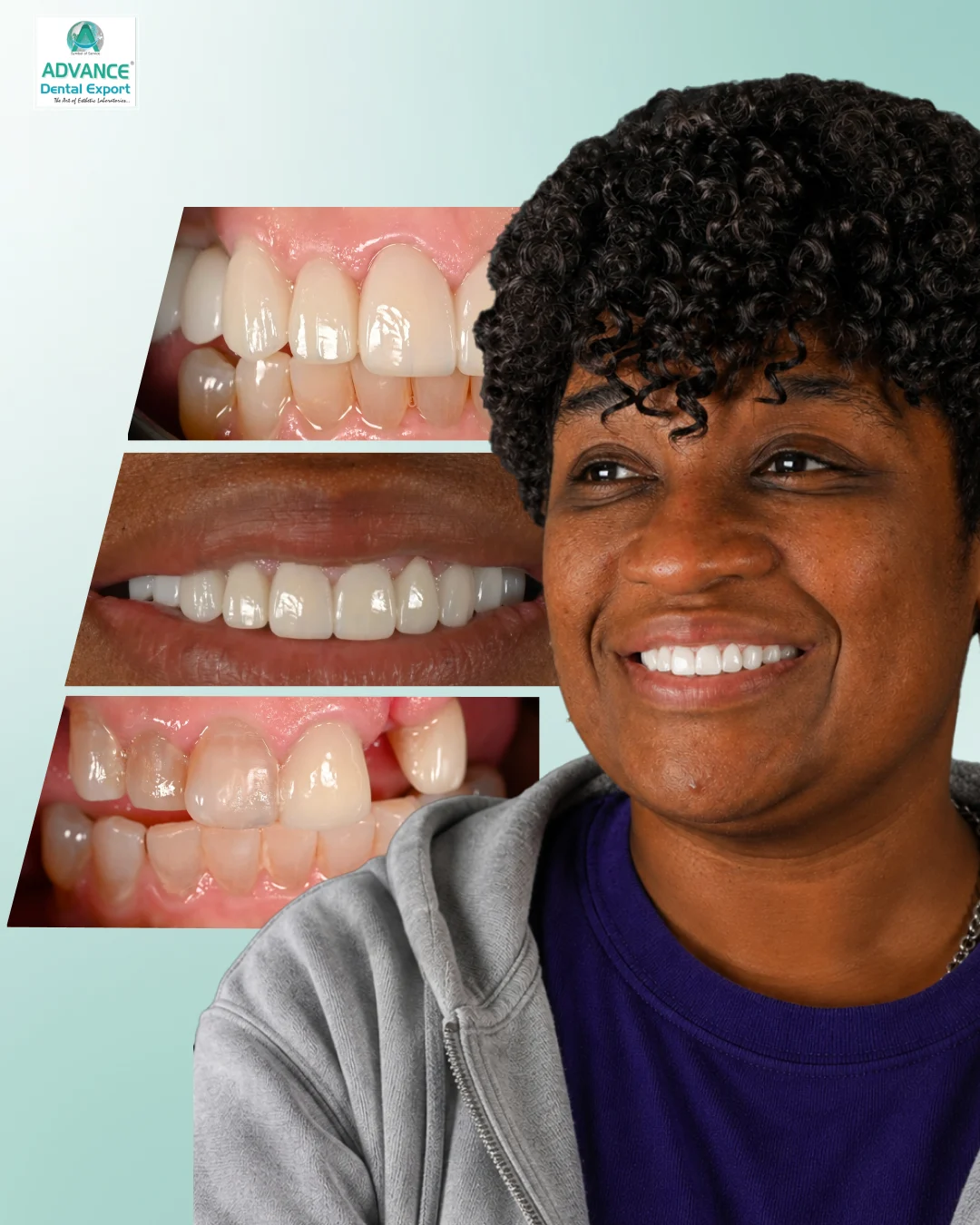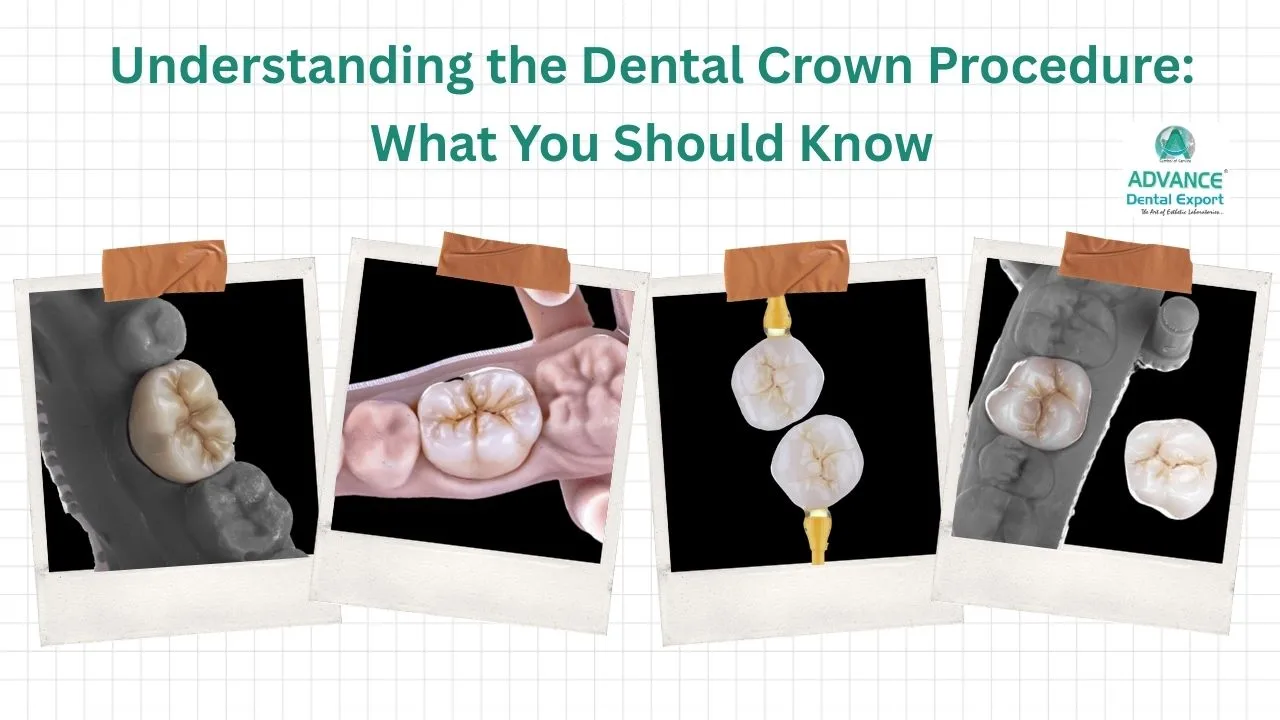
A dental crown is one of the most widely performed procedures in restorative dentistry and remains an essential solution for long-term tooth rehabilitation. These custom-made caps fully cover a damaged or weak tooth, protecting it like a shield and restoring its shape, strength, and appearance.
Whether you're an experienced clinician or beginning your career, understanding the role of a crown in dentistry is essential for predictable restorative outcomes. In this comprehensive guide, we’ll delve into what dental crowning involves, when crowns are needed, the different types available, the step-by-step crown procedure, and post-care tips.
Let’s explore how a properly planned teeth crown restores structural integrity, function, and long-term clinical success.
What is a Dental Crown?
A dental crown is a fixed indirect restoration designed to completely cover the prepared clinical crown, restoring form, function, and biomechanics. By “capping” the tooth, the crown restores the tooth’s shape, size, and strength, and can dramatically improve its appearance.
In restorative practice, a crown is a definitive dental restoration that protects compromised tooth structure while maintaining occlusal stability.
Dental crown vs. cap: There’s actually no difference between a “crown” and a “cap” – they are two names for the same thing. Dental professionals tend to use the term crown , while many patients say cap .
Key features of crowns
A crown completely covers the visible portion of a tooth, unlike fillings or veneers. Once cemented in place, it becomes the tooth’s new outer surface, taking on the force of biting and chewing.
Crowns are typically fabricated in a lab using advanced milling machines from materials such as ceramics, porcelain, metal, or composites. They are bonded to the prepared tooth with dental cement or adhesive.
Because crowns are fabricated outside the mouth (based on an impression or scan of the prepared tooth ) and then fitted later, they can be made very precisely and from materials that need special processing (like firing porcelain at high heat or casting metal).
With good care, crowns are also quite durable – often lasting 5 to 15 years on average, and sometimes much longer.
Why and When are Dental Crowns Needed?
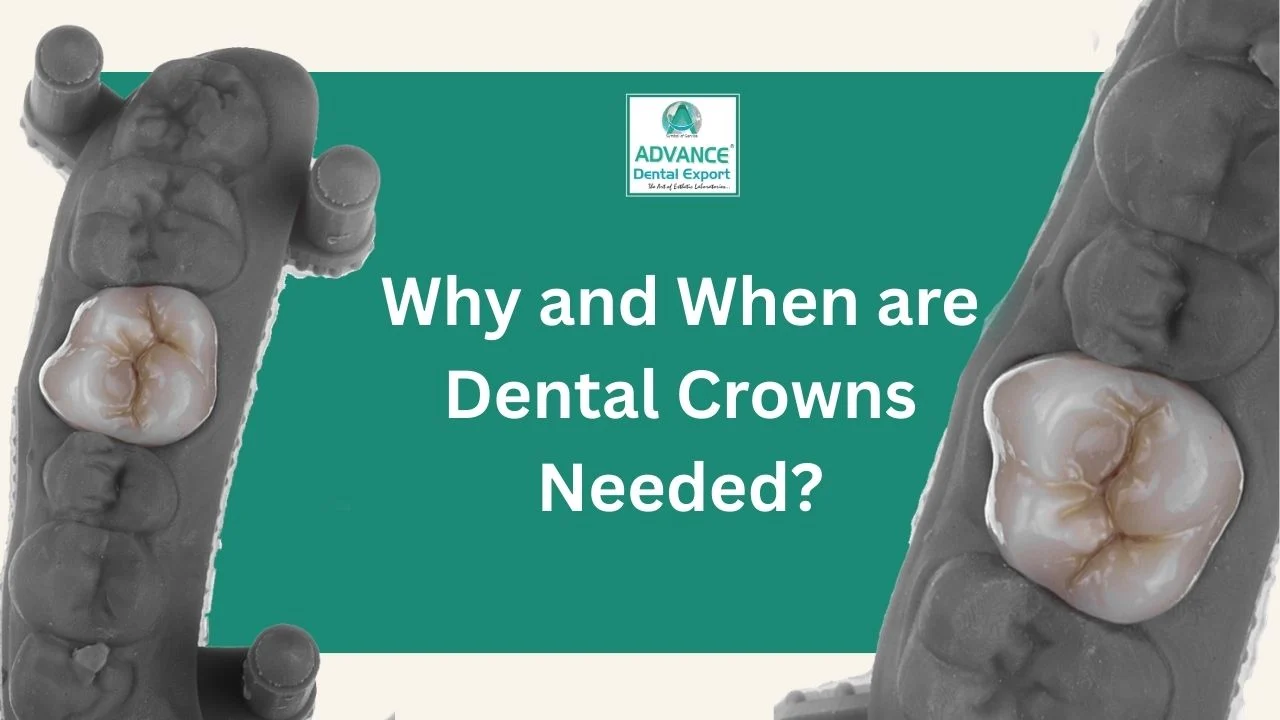
Dental crowns are a versatile solution in restorative dentistry. Here are some common indications for a dental crown – essentially, the reasons you’d recommend crowning a tooth instead of other treatments:
- Large Cavities or Extensive Decay: When a tooth has a very large cavity or failing filling and too little healthy tooth structure remains, a simple filling won’t hold up.
- Cracked, Fractured, or Weak Tooth: If a tooth is cracked or fractured (e.g., a patient bit on something hard and a cusp broke off), a crown can hold the tooth together and protect it from splitting further.
- Broken or Worn-Down Teeth: Teeth that are severely worn down (due to grinding habits or acid erosion) or already broken can be rebuilt with crowns.
- To Anchor a Dental Bridge: When a patient is missing a tooth and a fixed dental bridge is chosen as the solution, the adjacent teeth on either side of the gap typically need crowns to serve as bridge supports (abutments).
In many clinical situations, a dental restoration using full-coverage crowns offers greater long-term predictability than large direct restorations. Crowns maintain the structural stability of heavily restored or vulnerable teeth, significantly prolonging the tooth’s life.
Types of Dental Crowns (Materials & Options)
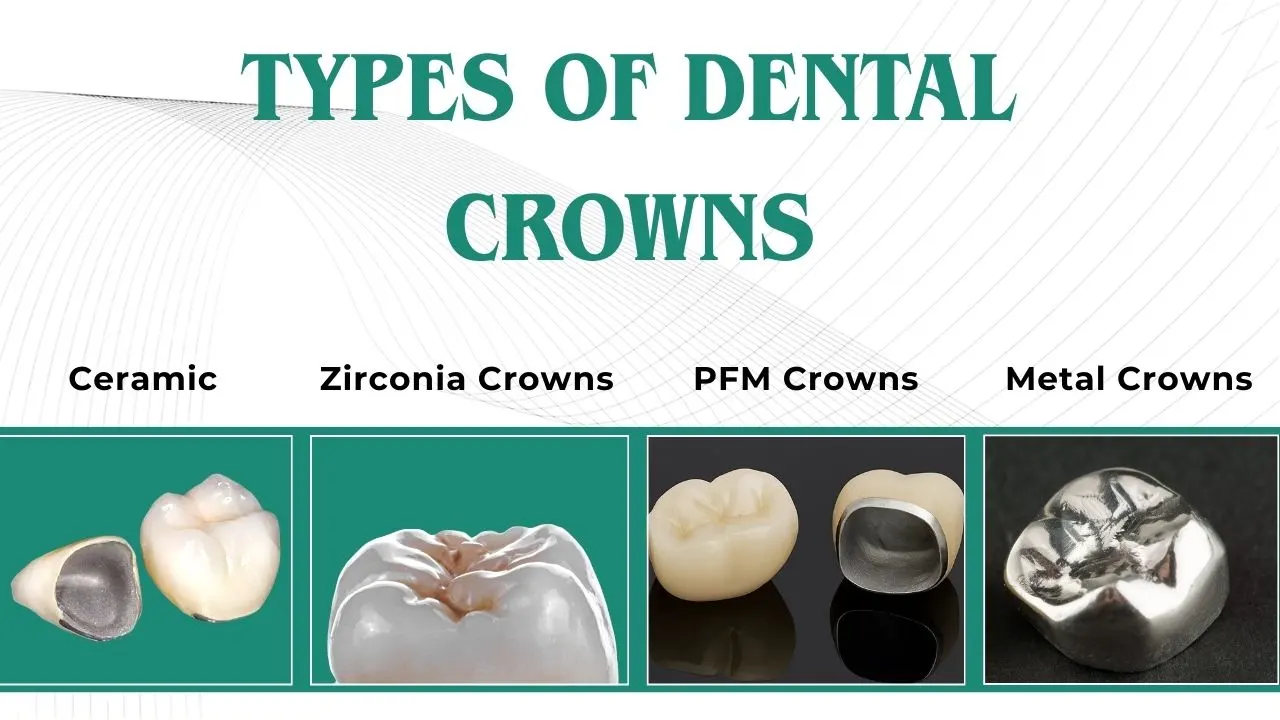
Selecting among different dental crown types depends on occlusal load, aesthetic expectations, remaining tooth structure, and restorative objectives. Crowns can be made from a variety of materials, and each type has its pros, cons, and ideal applications. As a dental professional, choosing the right crown type for a given tooth involves considering factors like the tooth’s location, the patient’s aesthetic expectations, and any material allergies. Below are the main types of crowns for teeth:
1. Metal Crowns
Metal crowns are made entirely of metal alloys. Common metals used include gold (often a gold alloy with copper or other metals), palladium, or base metal alloys like nickel-chromium or cobalt-chromium.
Advantages: Metals are extremely durable and can withstand strong biting and chewing forces without chipping. They also require less tooth reduction; only a small amount of enamel needs removal because metal can be made very thin yet still strong. Metal crowns rarely fracture or chip – it’s probably the longest-lasting crown material in terms of wear.
Drawbacks: The big downside is aesthetics – a gold or metallic-looking tooth isn’t usually desired for visible teeth. For that reason, full-metal crowns are typically used on out-of-sight molars where appearance isn’t a concern. Another potential issue is metal allergy: a small number of patients may have sensitivities.


Use Cases: Best for posterior teeth that need strength over looks, patients with heavy grinding (bruxism) where other materials might crack, or when minimal tooth removal is important.
2. Porcelain-Fused-to-Metal (PFM) Crowns
A porcelain-fused-to-metal (PFM) crown continues to be a dependable option when clinicians require a balance between aesthetics and durability. Essentially, there is a thin coping or substructure of metal that fits over the tooth, and porcelain is layered and baked on top of it to give a tooth-colored appearance. For many decades, PFM crowns were the workhorse of crown types – offering a balance of strength and aesthetics.
Advantages: Strength + Aesthetics: Because of the underlying metal, PFM crowns are quite durable and strong (approaching the longevity of full metal). At the same time, the porcelain exterior can be shaded to match surrounding teeth, making the crown look fairly natural in the mouth.
Drawbacks: The porcelain layer on a PFM crown can chip or fracture over time, especially if the patient has a heavy bite or grinding habit. In some cases, you might also notice a thin dark line at the gum edge – that’s the metal coping showing slightly, particularly if gums recede.
Use Cases: Crown material selection should always be based on biomechanical requirements, aesthetic demands, and patient-specific factors rather than dental crown cost alone. PFM crowns are a good all-around choice when you need a reliable, strong crown with decent aesthetics at a moderate cost.
3. All-Ceramic
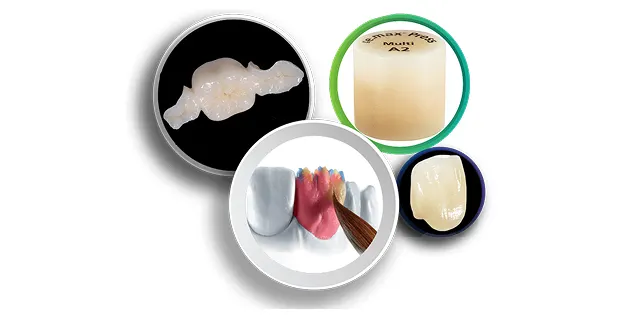
Modern ceramic crown systems provide highly aesthetic restorations with excellent optical properties for anterior rehabilitation. These have become increasingly popular, especially for patients who prioritize aesthetics. The category of ceramics is broad – it includes traditional feldspathic porcelain, modern reinforced ceramics like zirconia and lithium disilicate (e.g., E-max crowns), and others.
Advantages: The biggest advantage is superior aesthetics. All-ceramic crowns can mimic natural tooth enamel’s translucency and color better than any metal-based crown. They have a more lifelike appearance, which is why they’re often the top choice for front teeth restorations where looks are critical.
Drawbacks: Traditional porcelain can be more brittle than metal, meaning pure porcelain crowns (like older porcelain jacket crowns) can crack under heavy force. However, many all-ceramic crowns today use improved materials to mitigate this. Some ceramics (except special ones like zirconia) may also be less tough than PFM for the very back teeth.
Use Cases: All-ceramic crowns shine for anterior (front) teeth, where you need the best cosmetic result. They’re also indicated when a patient strongly prefers metal-free dentistry. With materials like zirconia, all-ceramics are also now used for posterior teeth, including molars, combining strength and aesthetics.
4. Zirconia Crowns (Advanced Ceramic)
A Zirconia crown is now routinely selected for posterior and full-coverage restorations because of its outstanding strength, fracture resistance, and compatibility with digital workflows. Zirconia is a type of crystalline ceramic (zirconium dioxide) that is incredibly strong and durable, sometimes dubbed “ceramic steel.”
Advantages: Exceptional Strength – Zirconia is tough. It can handle heavy chewing forces, making it suitable for any location in the mouth. Unlike traditional porcelain, zirconia is much more crack-resistant; it’s rare for a monolithic zirconia crown to chip or fracture. This gives them longevity similar to or even better than PFMs.
Drawbacks: The primary drawback was historically the opacity – early zirconia crowns, while white, were very opaque and sometimes not as lifelike for front teeth compared to porcelain. However, newer high-translucency zirconia has improved this significantly.
Use Cases: All-purpose – Zirconia can be used from front to back. For anterior crowns, you might use a more translucent zirconia or a layered zirconia (porcelain on zirconia) for top aesthetics. For posterior crowns, monolithic zirconia is fantastic due to its strength (great for patients who crack other crowns or who have metal sensitivities).
Dental Crown Procedure: Clinical Workflow for Predictable Crown Placement
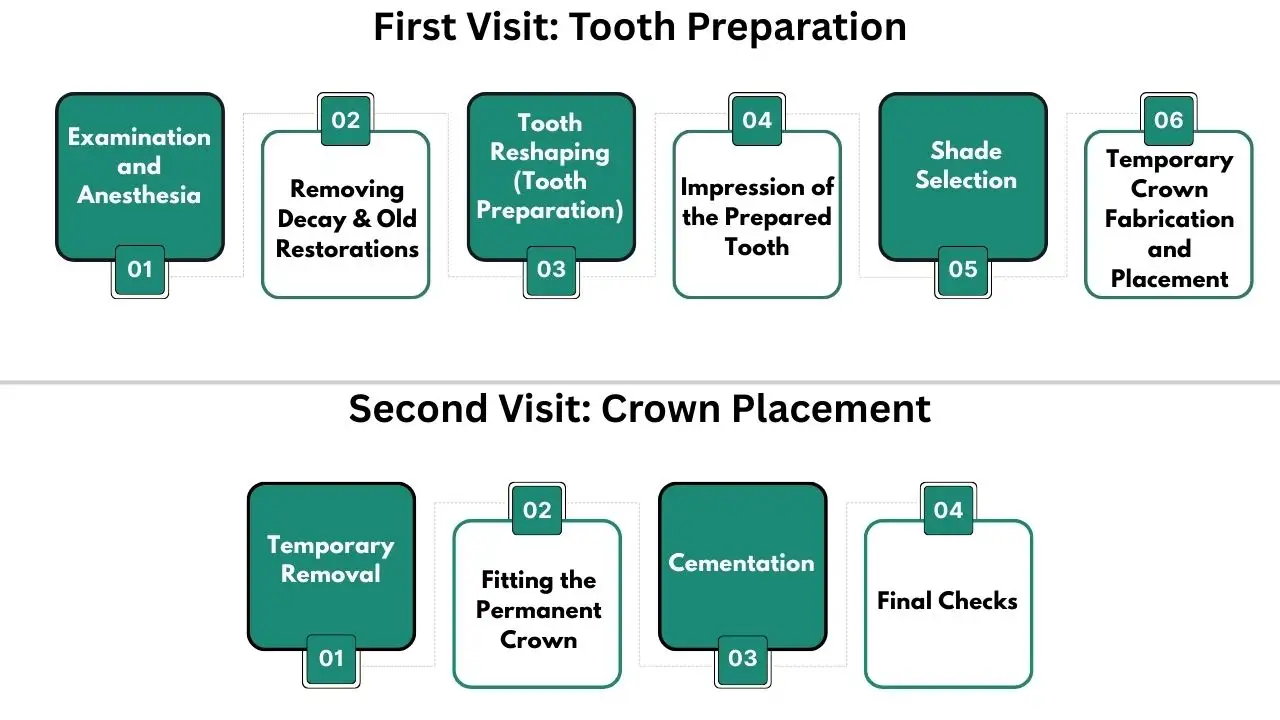
If you’re a practising dentist, you likely perform crown procedures routinely. But for completeness – and to help you communicate the process to patients or new team members – let’s outline the typical crowning procedure. The following dental crown procedure outlines the standard clinical workflow followed by restorative dentists:
First Visit: Tooth Preparation
- Examination and Anaesthesia: Before doing anything irreversible, you’ll examine the tooth clinically and often take an X-ray to ensure a crown is appropriate (checking the tooth roots, surrounding bone, etc.).
- Removing Decay & Old Restorations: If the tooth has decay or an old filling, clean that out first.
- Tooth Reshaping (Tooth Preparation): Proper tooth preparation is fundamental for achieving accurate crown placement, ensuring marginal integrity, adequate material thickness, and long-term retention. Using a high-speed handpiece (drill) with specific burs, you trim the tooth down on all sides and the chewing surface to make space for the crown material. This part of the appointment usually takes the most time.
- Impression of the Prepared Tooth: After the tooth is prepped, the next key step is capturing its impression. You’ll take an impression (or scan) of the opposite arch and how the teeth bite together (for proper bite alignment in the crown).
- Shade Selection: If the crown is tooth-colored (porcelain or ceramic), you will also determine the shade of the crown at this appointment
- Temporary Crown Fabrication and Placement: A temporary dental crown protects the prepared tooth, maintains occlusion, and preserves gingival architecture until laboratory fabrication is complete. The dentin could be sensitive once anaesthesia wears off, and the shaped tooth without a crown is vulnerable (and looks funny!). So you or your assistant will make a temporary crown to cover the tooth in the interim.
Lab Work: (Behind the scenes)
The dental laboratory fabricates the definitive dental prosthesis using conventional or digital workflows based on the clinical records provided by the dentist.
Between the two visits, the dental lab works on creating the final crown. A skilled technician pours the impression to make a stone model or uses the digital scan to design the crown on screen. The final product is a beautiful custom crown ready to be placed.
Looking for a trusted lab partner? Get high-precision restorations from Advance Dental Export
Second Visit: Crown Placement
Once the crown is ready (typically 1-3 weeks after prep), the patient returns for the delivery appointment.
- Temporary Removal: You’ll gently pry off the temporary crown (often using a tool to pop it off, since the cement is weak). Clean off the residual temporary cement from the tooth, and clean the tooth prep so it’s ready for bonding the new crown.
- Fitting the Permanent Crown: Before definitive cementation, evaluate the permanent dental crown for marginal adaptation, proximal contacts, occlusion, and aesthetic integration. Check that it seats fully and the margins (edges) fit well with no gaps. A well-made crown often fits right in with minimal tweaks.
- Cementation : Once you and the patient are happy with the fit and appearance, it’s time to permanently cement or bond the crown. Apply the cement inside the crown, then carefully seat the crown onto the tooth, having the patient bite down to ensure full seating.
- Final Checks: With the crown cemented, do one more bite check to ensure the occlusion is perfect – adjust if necessary by grinding a tiny bit on the crown (polish it after if you do).
And that’s it – the patient’s tooth has been successfully “capped”! Total time: Typically about an hour for the first prep visit, and 20-30 minutes for the cementation visit. Some clinics schedule longer, especially for anteriors, where extra care on aesthetics is needed.
Aftercare and Maintenance of Crowns
Once a crown is in place, it’s not “set and forget.” Both the patient and dentist should take steps to ensure the crown and the underlying tooth remain healthy for as long as possible. Here are important care tips and maintenance advice for crowned teeth :
- Brushing & Flossing: Brushing twice a day with fluoride toothpaste and flossing daily around the crown is crucial.
- Dietary Precautions: With permanent crowns, patients can mostly eat normally after the cement sets. However, certain habits can threaten the crown’s longevity.
- Addressing Bruxism or Clenching: Patients with parafunctional habits should receive occlusal protection to improve the longevity of a full coverage crown restoration.
- Regular Check-ups and Cleanings: Encourage patients to keep up with their regular dental visits (typically every 6 months) even after getting a crown.
- Longevity – With proper care, crowns can last a decade or longer. In fact, many last well beyond 15-20 years. However, the average lifespan is about 5–15 years for a crown.
By following these guidelines, patients can maximize the crown’s lifespan and maintain overall oral health. As a dentist, you can reinforce these points right after cementation and again at recall visits. It’s all about preserving that investment in their smile.
Dental Crowns Problems and Complications
Despite the high success rate of dental crown treatment, clinicians should monitor biological and mechanical complications during follow-up appointments. Both dentists and patients should be aware of these so they can be prevented or addressed promptly. Here are some common problems or disadvantages of dental crowns and how to handle them:
- Tooth Sensitivity or Discomfort: If a crowned tooth remains very sensitive or painful (especially if it hurts to bite down), it could indicate the bite is high or, in rare cases, the tooth’s nerve is inflamed (pulpitis).
- Crowns Loosening or Falling Off: Crowns can fall off if the cement fails or if there’s decay underneath, compromising the fit.
- Chipping or Fracture of Crown Material: An all-ceramic crown can chip or crack, especially if the patient chews something hard or has an unnoticed grinding habit.
- Decay Under the Crown: As noted, a crown doesn’t make the tooth immune to cavities. If oral hygiene lapses, tooth decay can sneak under the crown edges (especially at the margin near the gum).
Conclusion and Your Call to Action
Dental crown treatment remains one of the most predictable restorative procedures when accurate diagnosis, material selection, laboratory communication , and adhesive protocols are combined.
For dental professionals across India, mastery of the crown procedure and materials is a testament to your expertise and a key component of your practice’s success. Our role as dental professional is not just to place crowns but also to place confidence – confidence in biting, chewing, smiling, and knowing that their tooth is well taken care of.
In the end, a well-made crown is more than just a cap on a tooth; it’s a long-term solution that can spare someone pain, restore their smile’s appearance, and allow them to enjoy their favourite foods again without worry. That is the real reward for both the dentist and the patient.
Keep spreading healthy smiles! 😄